



Automated Code and Character Inspection for Automotive Components
Inline inspection of 1D and 2D codes, DPM markings, OCR and OCV

Unique markings link automotive components to production, quality and process data. They support traceability, variant management and automated downstream processing throughout production.
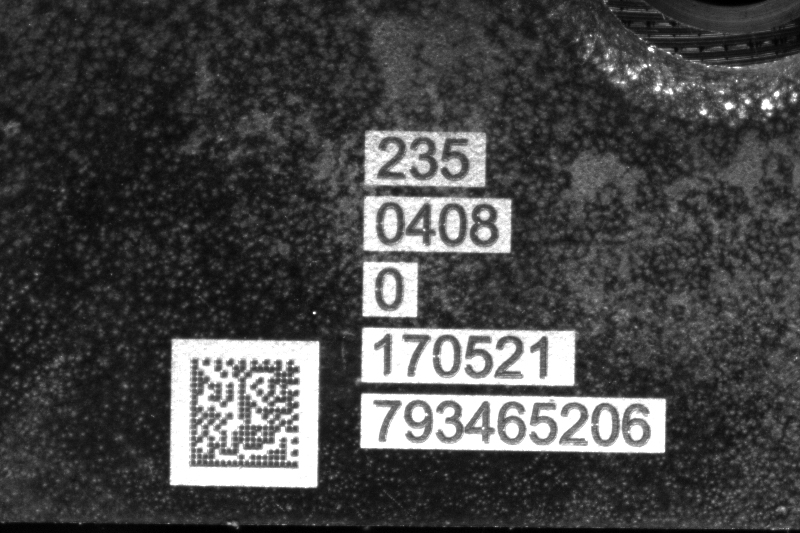
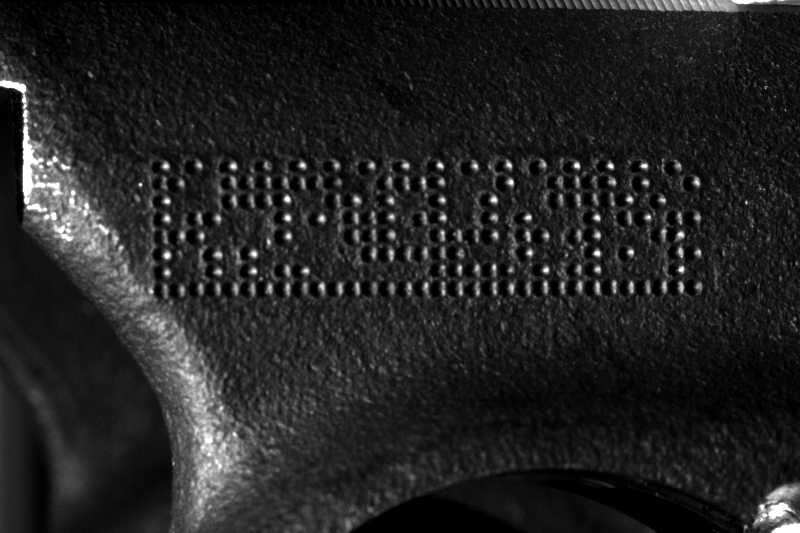
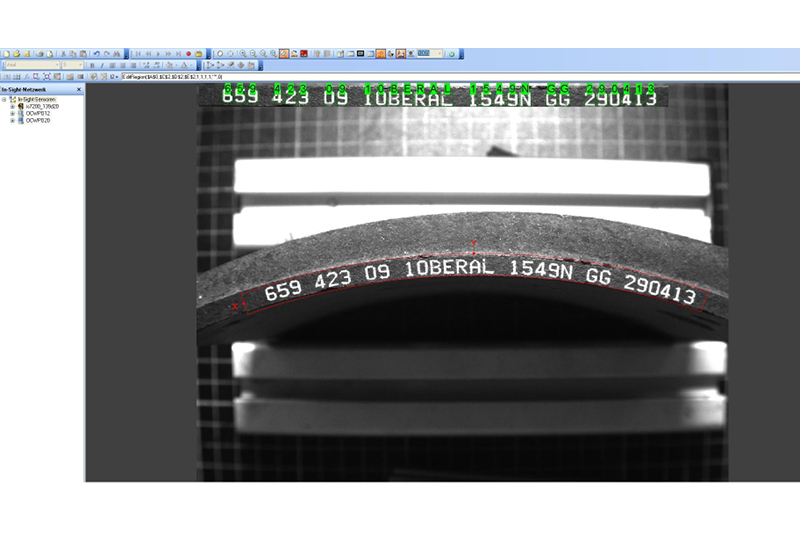
OCTUM develops customized machine vision systems for reading and inspecting codes and human-readable text. The systems capture barcodes, Data Matrix codes, directly applied markings and alphanumeric characters – including markings on metallic, textured, reflective or curved component surfaces.

Do you have any questions?
Then please contact our experts
at +1 (980) 431-9540 or
via our contact form
What is automated code and character inspection?
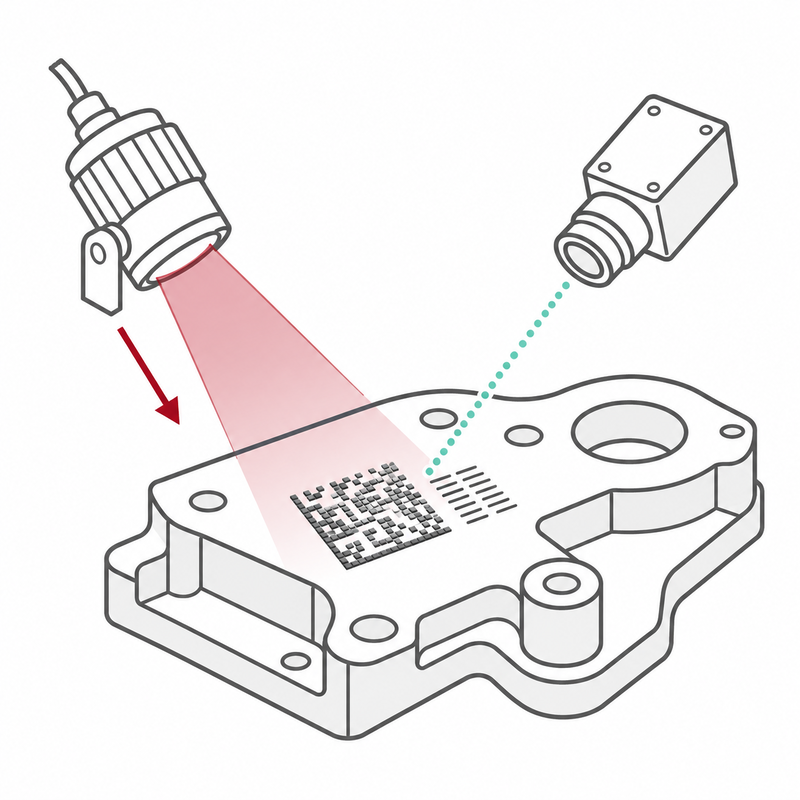
During automated code inspection, a camera captures the marked area of a component. The machine vision software locates the code or characters, reads the encoded information and inspects it according to defined criteria.
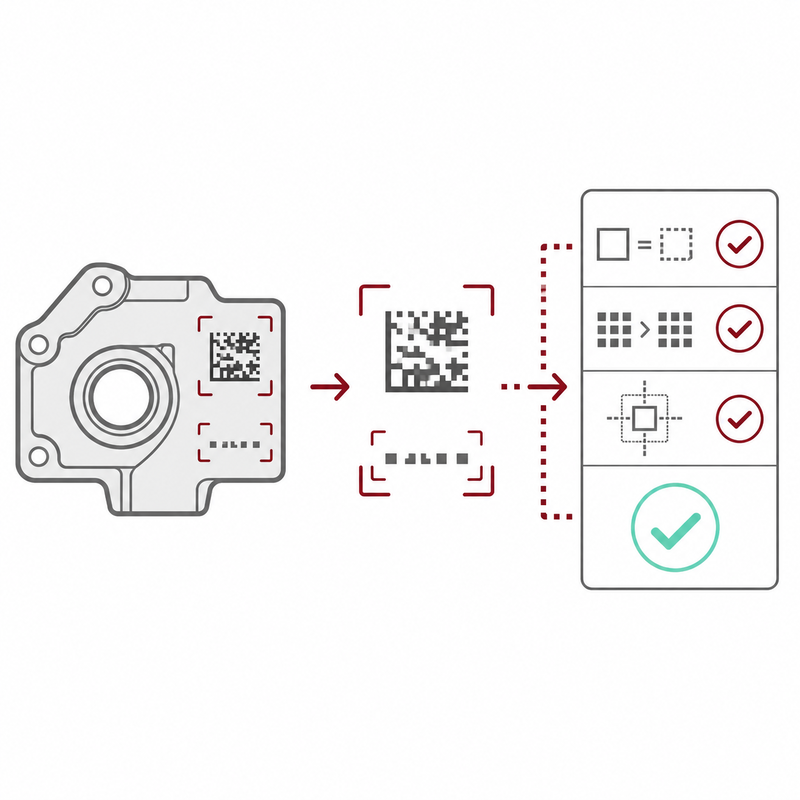
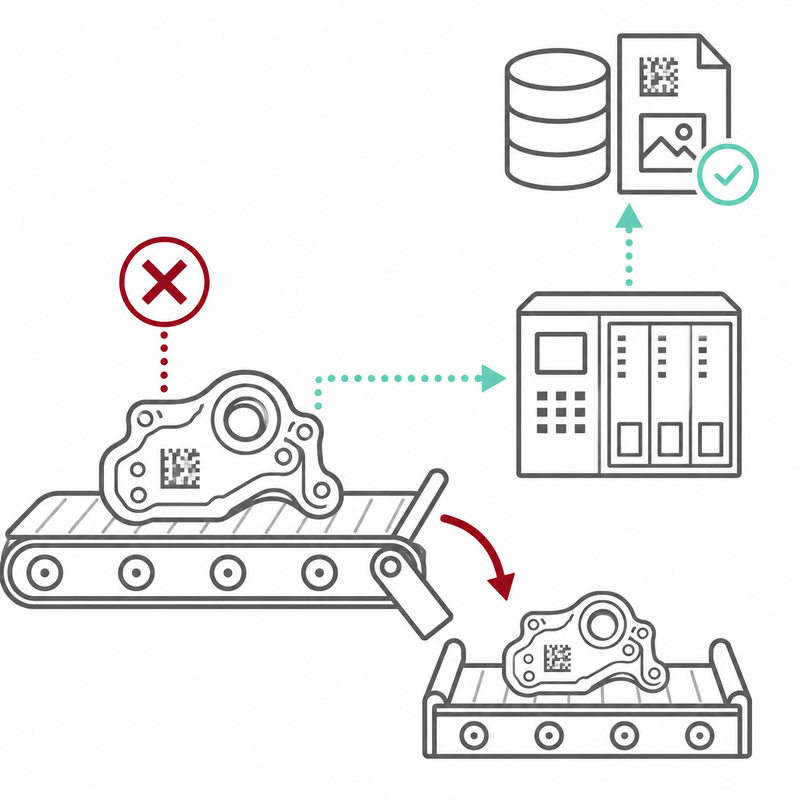
Depending on the inspection task, the captured data can be compared with a target value, production order, database entry or an additional human-readable marking. The inspection result is then transmitted to the PLC, machine control system or a higher-level production system.
This allows components to be identified, assigned to specific variants, routed through subsequent process steps and rejected if they have been marked incorrectly.
The codes and characters that can be read reproducibly depend on factors such as the marking method, contrast, surface properties, code size, component position, contamination and optical accessibility.
Reading codes, checking content and evaluating code quality
These inspection tasks are often collectively referred to as code inspection, although they serve different purposes.
Evaluating code quality
The optical quality of a marking can also be evaluated based on defined characteristics. These may include contrast, damage, incomplete code elements or defects within the code.
Standards-based quality classification or standardized code grading requires specifically designed inspection conditions. Whether this is required is therefore determined individually for each project.
OCR and OCV
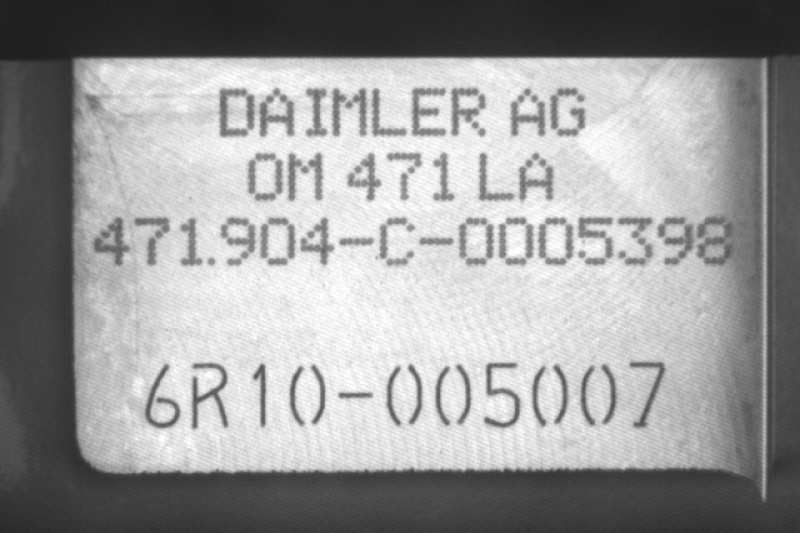
OCR – Optical Character Recognition – reads unknown or changing letters and numbers.
OCV – Optical Character Verification – compares applied characters with a predefined character string or a trained reference image.
Both methods can be used to inspect serial numbers, type designations, date information and other human-readable content.
Challenges when reading directly marked codes
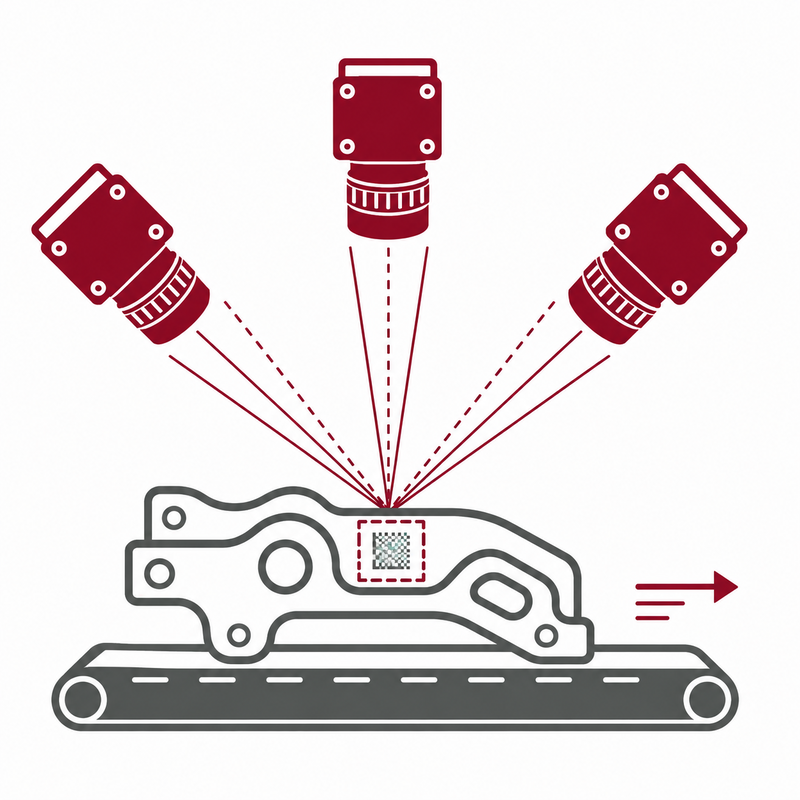
Automotive components place high demands on optical image acquisition. Codes and characters are often located on surfaces that do not provide consistent imaging conditions.
Typical challenges include:
- low contrast between the marking and the component
- reflective, dark or textured surfaces
- curved or uneven component areas
- varying positions and orientations
- different marking depths and character shapes
- contamination, oil or process residues
- damaged or incomplete markings
- small codes where installation space is limited
- moving components and short cycle times
The camera, lens, illumination and evaluation method are therefore matched to the component, marking and production conditions.
4. Transfer the inspection result
The result is transmitted to the machine control system or a higher-level system. Depending on the system concept, incorrectly marked components can be rejected, blocked or routed for rework.
The decoded data, images and inspection results can also be documented if required.
Typical applications in automotive production
OCTUM develops inspection solutions for tasks including:
- reading Data Matrix codes on metal components
- inspecting laser-marked codes and serial numbers
- reading dot-peened codes on engine and drivetrain components
- OCR inspection of type, material and serial numbers
- OCV inspection of predefined character strings
- inspecting printed markings on brake components
- reading embossed or stamped characters
- checking the presence and completeness of a marking
- comparing encoded data with human-readable text
- assigning components to variants or production orders
- controlling subsequent machining and assembly steps
- providing data for traceability and documentation
Supporting traceability and process control
An unreadable or incorrect marking can prevent a component from being uniquely identified or processed correctly during subsequent production steps.
Inline code inspection allows the marking to be checked immediately after the marking process. Incorrect codes and characters can therefore be detected before the component passes through further machining or assembly processes.
Automated code and character inspection supports:
- unique identification of components
- assignment of variants and production orders
- traceability throughout the production process
- inspection immediately after the marking process
- prevention of incorrectly marked components
- automated control of subsequent process steps
- documentation of read content and inspection results
- objective and repeatable quality inspection
Integration into new and existing production systems
OCTUM adapts the inspection system to the respective production environment and available interfaces. Factors such as cycle time, available installation space, component movement, positioning, marking method and required data exchange are taken into account.
Depending on the application, different system concepts are possible:
- stationary code-reading stations
- inline inspection at production speed
- camera-based systems with multiple views
- compact smart camera solutions
- PC-based OCR and OCV systems
- inspection of stationary or moving components
- integration into marking, machining and assembly stations
- retrofitting of existing production systems
- communication with PLCs and machine control systems
- connection to databases and higher-level production systems
- component- and variant-specific inspection programs
From feasibility study to commissioning
The development of an inspection solution begins by defining the codes, characters, target content and permissible deviations. Ideally, original components representing variations in contrast, position, marking depth and surface characteristics are available for testing.
As part of a feasibility study, OCTUM can determine the imaging conditions under which the markings can be captured and evaluated reproducibly. The results provide the basis for selecting the camera, lens, illumination and evaluation software.
OCTUM supports the project from concept development and implementation through integration and commissioning to support during ongoing operation.
What is the difference between code reading and code verification?
Code reading determines the encoded content. Content inspection additionally compares this value with a predefined value or data record. Standards-based code verification also evaluates the optical quality of a code under defined inspection conditions.
Can codes on reflective or low-contrast surfaces be read?
This is generally possible if the code can be made reproducibly visible using a suitable combination of illumination, optics and image evaluation. Feasibility depends on factors including the surface, marking method, code size and component geometry.
Is your marking not listed?
Code types, marking methods and production conditions vary from one application to another. Together with you, we evaluate how your codes and characters can be captured optically and how the inspection can be integrated into your production process.
Talk to us about your components and markings.

OCTUM USA Inc.
14045 South Lakes Drive
Charlotte, NC 28273
USA
Phone: +1 (980) 431-9540
Email: info@octum-usa.com