



OCvis – open machine vision software for industrial inspection tasks
Deep learning, rule-based machine vision, graphical inspection workflows and industrial interfaces in a scalable software platform
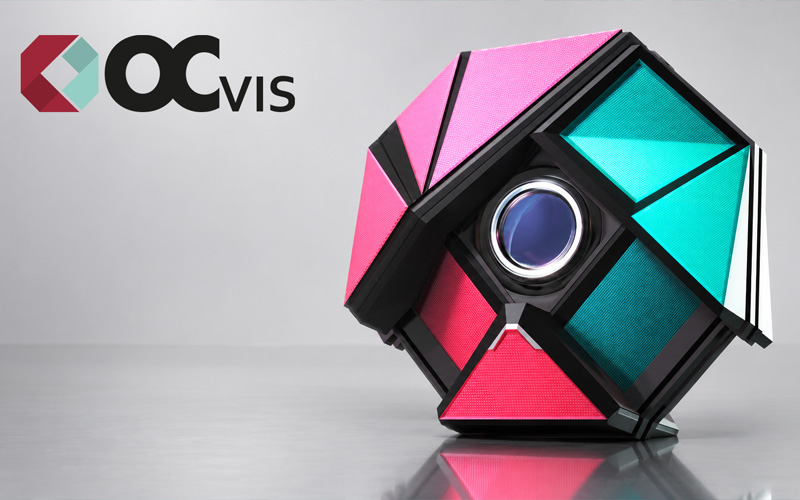
OCvis is OCTUM’s software platform for machine vision, automated optical inspection and inline quality control. It brings together image acquisition, image processing, evaluation, visualization, data storage and machine communication in one integrated system.
The platform combines rule-based image processing with deep learning. This allows both clearly defined features and complex, highly variable defects to be evaluated within the same inspection program.
OCvis is suitable for straightforward presence and completeness checks as well as complex multi-camera applications, surface inspection, geometric measurements, OCR and code inspection, and customized AOI systems.

Do you have any questions?
Then please contact our experts
at +1 (980) 431-9540 or
via our contact form
One software platform for the entire inspection process
Machine vision involves more than an algorithm. For inspection to work reliably in production, cameras, evaluation, operation, data processing and machine communication must work together.
OCvis covers this entire process in a modular platform – from image acquisition to the transfer of inspection results to production equipment.
Your benefits with OCvis
- Combination of rule-based machine vision and deep learning
- Graphical creation of inspection programs
- Browser-based client-server architecture
- Role-based user and access rights management
- Individually configurable dashboards
- Support for GenICam-compatible cameras
- Storage of measurement data and images
- Integration with PLCs, machines and higher-level systems
- Modular expansion through plugins and custom functions
- Support for applications in regulated production environments
The software can be used in fully automated lines, semi-automated inspection stations and manual workstations.
Combining rule-based machine vision and deep learning where it makes sense
Not every inspection task requires artificial intelligence. At the same time, certain surface defects, material variations and cosmetic deviations are difficult to describe using fixed rules.
OCvis therefore makes it possible to combine rule-based image processing and deep learning within one inspection workflow.
Rule-based machine vision
Conventional methods are particularly suitable for features that can be described geometrically or assessed against defined criteria.
Typical applications include:
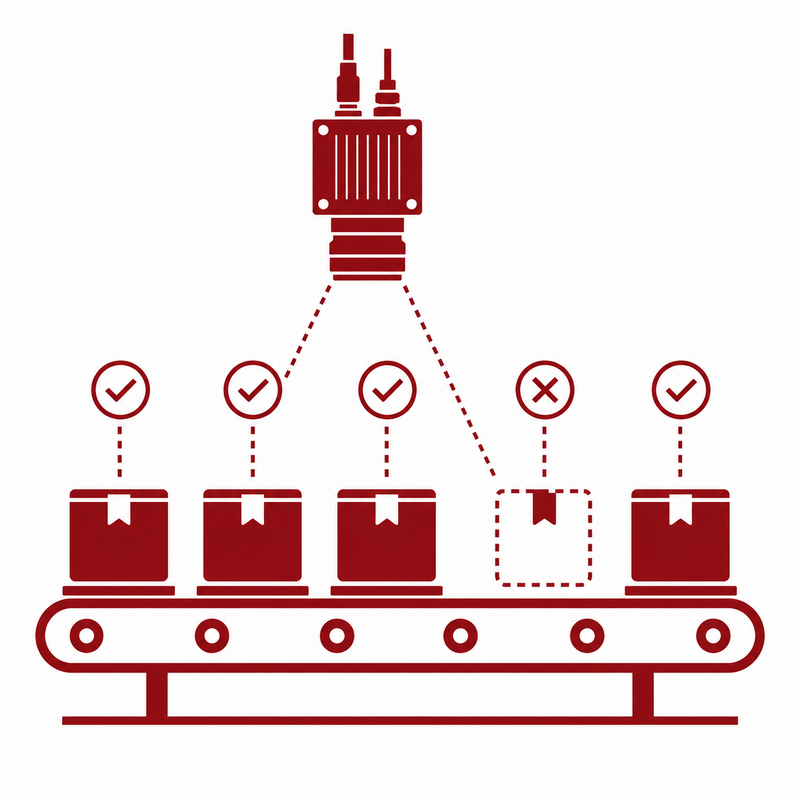
- Presence and completeness inspection
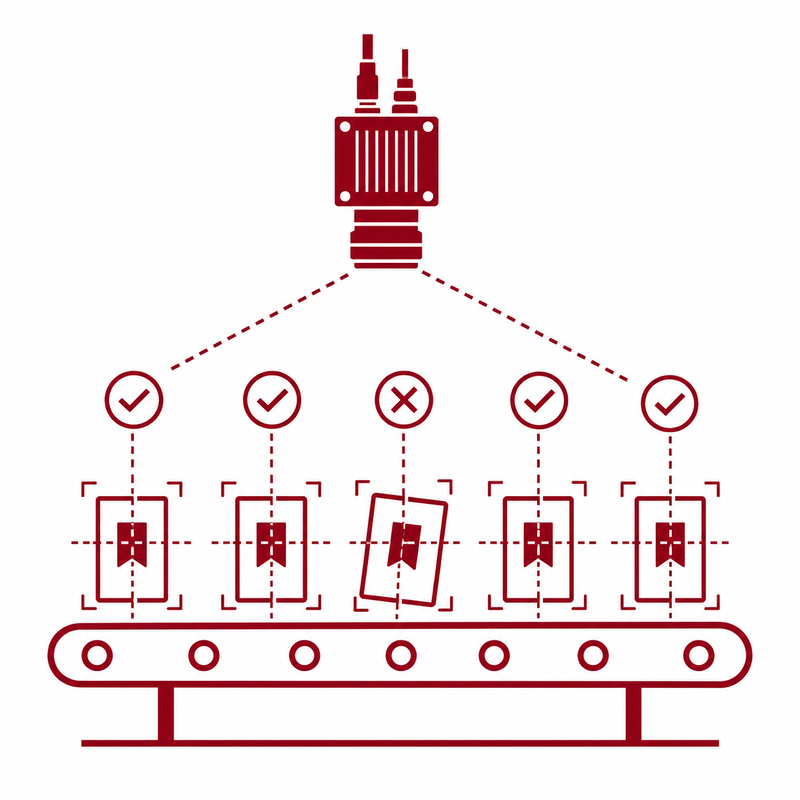
- Position and orientation checks
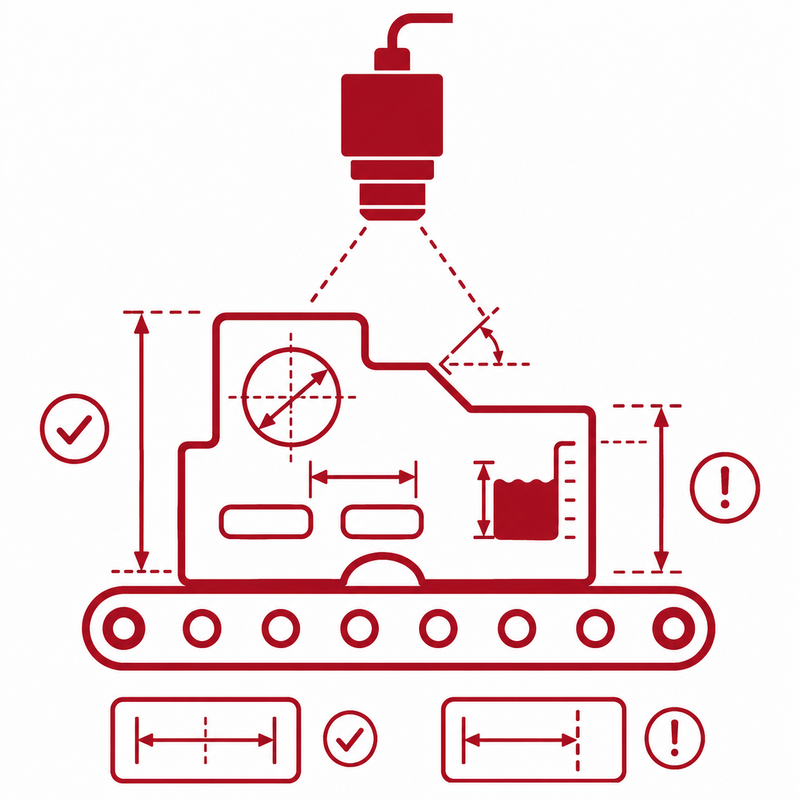
- Distance, angle and geometry measurement
- Contour inspection
- Color and contrast inspection
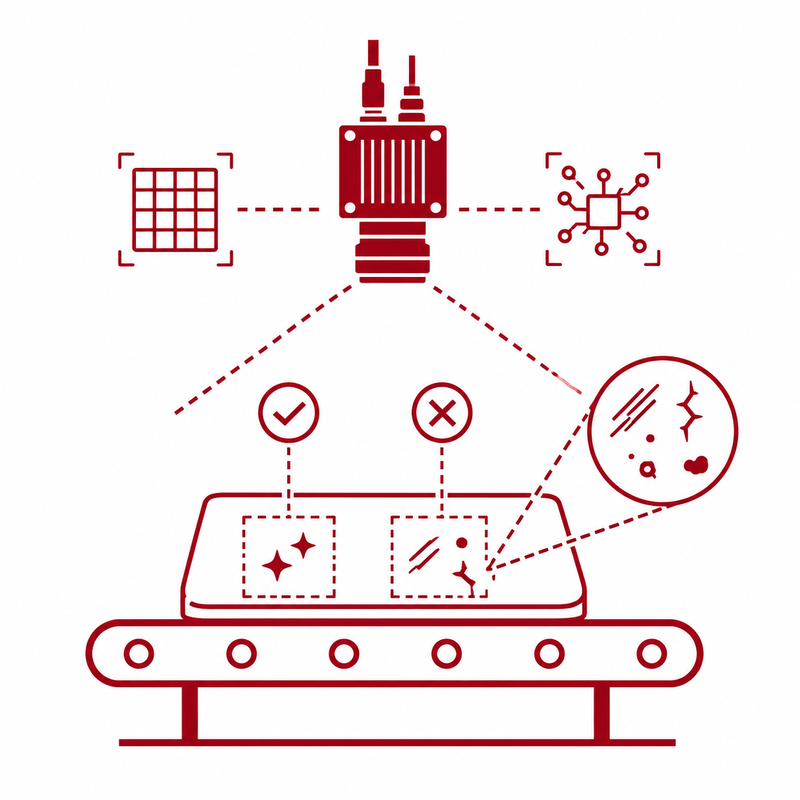
- Particle and stain detection
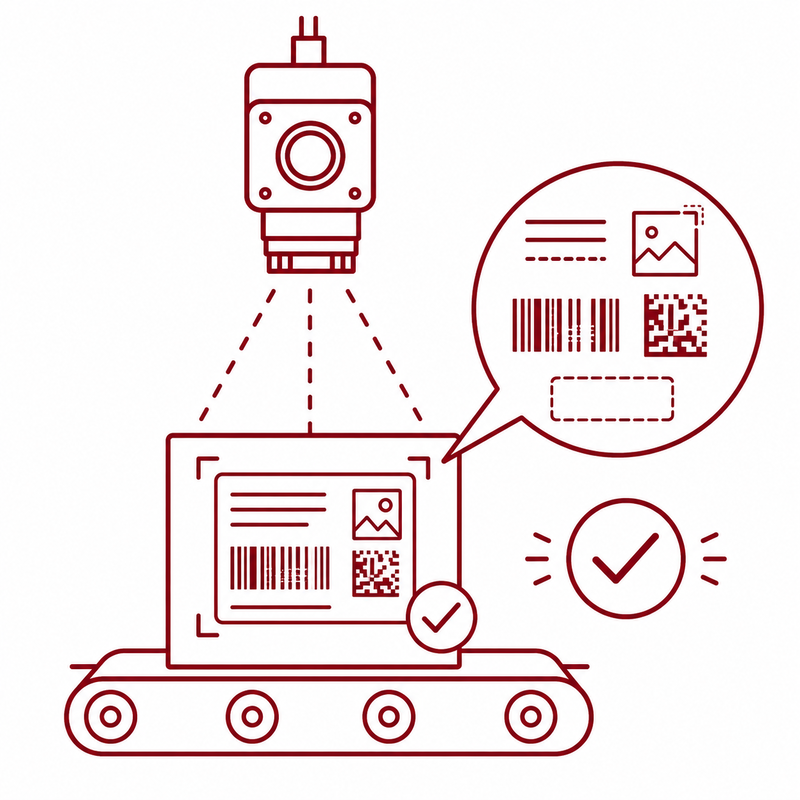
- Reading and verification of human-readable text
- OCR and OCV inspection
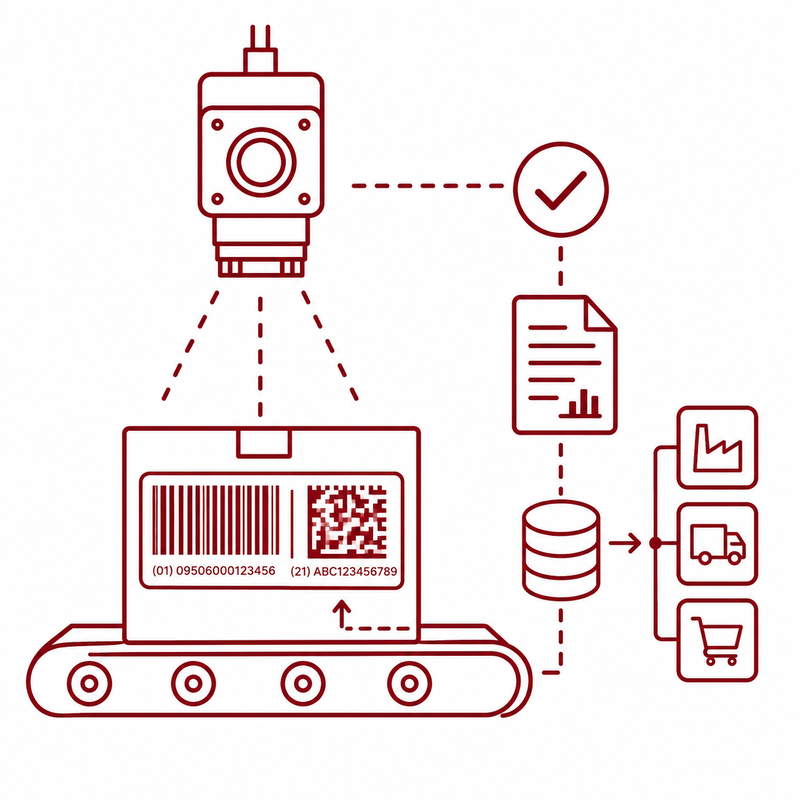
- Barcode and Data Matrix code inspection
Rule-based methods deliver traceable results and are particularly effective when acceptance and rejection criteria can be clearly defined.
Deep learning for complex defects
Deep learning is used when products, surfaces or defects vary more widely and are difficult to describe fully with fixed thresholds.
OCvis supports, among other functions:
- Anomaly detection
- Classification
- Segmentation
- Object detection
- DeepOCR
The inspection task determines which technology to use. Often, the most robust solution comes from combining both methods where each is most effective.
Create inspection programs graphically – without writing code
OCvis uses a graphical, modular approach to building inspection workflows.
More than 70 predefined modules cover the essential steps of an industrial inspection process:
- Image acquisition and camera control
- Image preprocessing
- Image analysis and feature extraction
- Result evaluation
- Tolerance and threshold checks
- Storage of images and measurement data
- Logic and sequence control
- Communication with production equipment
Modules are connected to form a traceable inspection workflow. This keeps applications clearly structured and makes them easier to adapt and maintain over the long term.
Standard functions can be reused across projects. Additional modules or plugins can address customer-specific requirements without unnecessarily changing the software core.
Browser-based client-server architecture
In OCvis, image processing and visualization are technically separate.
Images and inspection data are processed on the OCvis server. Operation, configuration and visualization are provided through a web browser.
This offers several advantages:
- Centralized processing of inspection programs
- Access from different browser-capable devices
- No separate installation of the user interface required
- Consistent display at different workstations
- Integration into existing IT and OT environments
- Flexible scaling for different system concepts
Production, quality assurance, engineering and service teams can access the information they need for their respective tasks.
OCvis supports Windows- and Linux-based system architectures and common browsers such as Chrome, Chromium, Firefox and Edge.
Multi-user operation with roles and access rights
Not every user needs the same functions.
An operator needs to view inspection results and adjust approved parameters. Quality assurance needs measurement data, defect images and detailed analyses. Engineering and administration need broader rights for inspection programs, projects and user management.
OCvis therefore provides role-based user management with individually configurable user groups, access rights and operating levels.
Depending on the application, roles may include:
- Operators
- Shift supervisors
- Quality assurance
- Application and engineering teams
- Service
- Administration
This determines who may view information, change parameters, edit inspection programs or use administrative functions.
Customized dashboards for production, quality assurance and engineering
The OCvis user interface can be adapted to the inspection task and the user’s role.
Possible content includes:
- Live images
- Image overlays and defect markings
- Overall inspection result
- Individual results from inspection steps
- Measurements
- Limits and thresholds
- Product format and production information
- Approved operating parameters
A production dashboard can be limited to a few relevant items. More detailed views can be provided for quality assurance or engineering.
This gives each user the information needed for their task.
Using measurement data, inspection images and process information
A single inspection result shows whether a product meets the defined criteria. Over time, measurement and inspection data can also reveal changes in the production process.
Depending on the application, OCvis can store measurement data in:
- PostgreSQL
- CSV files
- Working memory (RAM)
Inspection images can be stored according to project-specific criteria, such as the inspection result, product format, batch or defect class.
The data can be used for statistical analysis, quality assurance or integration with business intelligence systems. This makes it possible to analyze gradual dimensional changes, rising defect rates or differences between formats and production periods.
Open to cameras, libraries and custom extensions
OCvis is designed as an open software platform.
GenICam-compatible cameras can be integrated into the system architecture regardless of camera manufacturer. The GenICam standard provides a manufacturer-independent way to connect industrial cameras and vision software.
Existing vision libraries and customer-specific expertise can also be integrated through modules and plugins.
This reduces unnecessary dependencies and allows cameras, computer hardware and software components to be selected for the actual application.
Integration into machines and production lines
An inspection result is most useful when it is reliably integrated into the production process.
Custom interfaces and communication sequences can be added to suit a project.
OCTUM considers not only the software but also how cameras, optics, lighting, triggers, cycle time, PLCs, operation and data flow work together.
OCvis for regulated production environments
In pharmaceutical and medical device production, inspection systems must do more than inspect reliably.
Changes, user actions and relevant process data must also be documented in a traceable manner.
OCvis supports such requirements through functions including:
- Audit trail
- User and group management
- Role-based access rights management
- Traceable parameter changes
- Structured inspection programs
- Individually configurable user levels
The software is designed for applications where requirements under EU GMP, GAMP 5 or 21 CFR Part 11 must be considered.
Whether, and to what extent, a complete inspection system meets regulatory requirements always depends on the specific application, system configuration, validation strategy and the user’s operational processes.
For different industries and system concepts
OCvis is suitable for applications in:
- Pharmaceuticals
- Medical devices
- Packaging
- Automotive
- Plastics processing
- Metalworking
- Cosmetics
- Food processing
- Other industrial production sectors
The platform can be used in new machines, existing production lines, custom inspection stations and retrofit projects.
The key considerations extend beyond the industry itself: the product, defect types, cycle time, product variants, installation conditions and documentation requirements all matter.
OCvis technical specifications
- More than 70 modules for creating and running inspection programs
- Combination of rule-based machine vision and deep learning
- Browser-based client-server architecture
- Multi-user operation
- Role-based user and access rights management
- Individually configurable dashboards
- Support for GenICam-compatible cameras
- Windows 10/11 and Linux x64/ARM
- Measurement data storage in PostgreSQL, CSV or RAM
- Individually configurable image storage
- Integration with PLCs, production equipment and BI systems
- Language selection: German/English
- Application-dependent inspection throughput of up to 1,000 parts per minute
The achievable inspection speed depends on image resolution, number of cameras, algorithms, deep-learning models, communication and computer hardware. It should therefore always be evaluated for the specific application.
Is OCvis suitable for pharmaceuticals and medical devices?
OCvis supports functions such as an audit trail, user management and role-based access rights. It is designed for applications where EU GMP, GAMP 5 or 21 CFR Part 11 requirements must be considered. Full regulatory assessment is always project-specific.
OCvis as part of a complete OCTUM inspection solution
OCTUM provides more than software.
As a systems integrator, we combine OCvis with cameras, optics, lighting, computer hardware, interfaces and machine integration to develop a solution tailored to the inspection task.
We support projects from the initial technical assessment through long-term operation:
- Requirements analysis
- Feasibility study and proof of concept
- System and software design
- Application development
- Integration into a machine or production line
- Commissioning
- Training
- Service and remote support
- Adaptation to new products, formats and inspection features
OCvis is thus used as part of a reliable inspection system for production. This approach reflects OCTUM’s established positioning: from the inspection task through system integration and commissioning to long-term support.
Would you like to use OCvis for your inspection task?
Tell us about your product, the relevant defect types, the required cycle time and your existing production environment.
Together, we will assess whether rule-based machine vision, deep learning or a combination of both is appropriate for your application.

OCTUM USA Inc.
14045 South Lakes Drive
Charlotte, NC 28273
USA
Phone: +1 (980) 431-9540
Email: info@octum-usa.com