




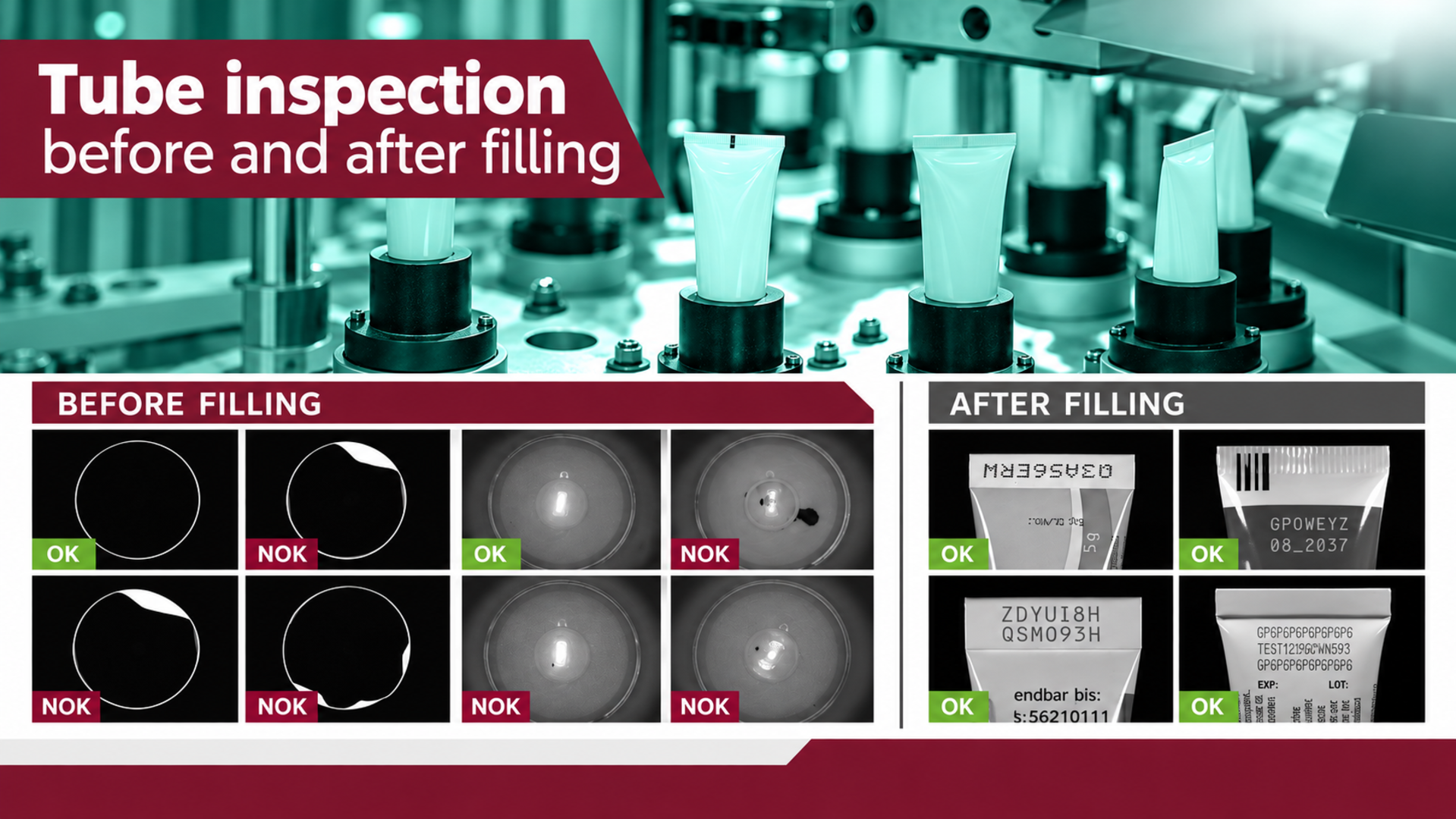
A deformed opening or visible contamination can already interfere with positioning and filling. Detecting these defects early helps prevent defective tubes from entering the next production step or coming into contact with the product.
After filling and sealing, the inspection requirements change. Now the focus may include:
- Folds, seams and trimming
- Printed images and product variants
- Batch numbers and expiration dates
- Barcodes and Data Matrix codes
- Visible defects in the sealing area
OCTUM tube.inspect combines inspection stations before and after filling in one coordinated system. Multiple cameras and inspection modules can be operated through a shared software platform and integrated into new or existing tube filling machines.
Depending on the tube format, inspection task and machine concept, inspection speeds of up to 500 tubes per minute are possible.
>> Learn more about automated inspection for metal, laminate and plastic tubes